The Solo Safety Protocol: A Data-Driven Guide to Traveling Alone
There’s a specific brand of "advice" given to women traveling solo that usually boils down to: “Just be careful!” As a logistics girlie, I find that advice incredibly unhelpful. "Being careful" isn't a plan; it’s a vibe. When I’m navigating a Moroccan souk or driving across the UK, I don’t rely on vibes—I rely on actual precautionary measures.
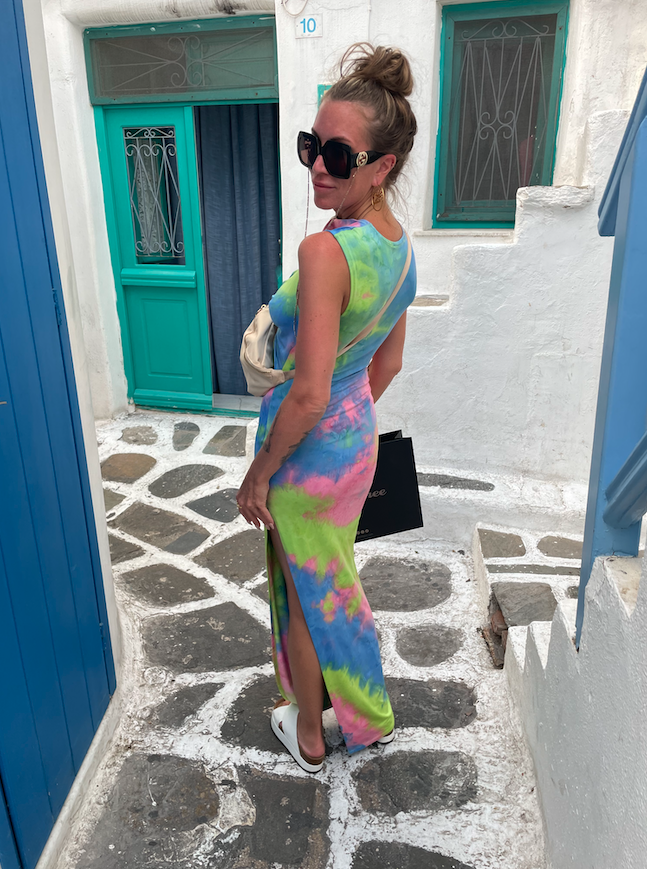
Casual shopping in Mykonos.
Traveling solo is one of the most empowering things you can do, and something I absolutely love. Don’t get me wrong, I love my group trips with my best friends. But there’s nothing quite as freeing as a stretch of days in a new place, with only yourself to decide the itinerary and a great new book as your restaurant date. The "Type A" way to do it involves minimizing risk so you can actually enjoy the view. Here is my non-negotiable checklist for solo female travel safety and the logistics of staying secure.
1. The "Golden Hour" Arrival Rule
This is my #1 rule for solo travel logistics: Never arrive in a new city after dark.
Whether it’s a flight into Heathrow or a train into Edinburgh, I coordinate my transport to land between 10:00 AM and 3:00 PM. This gives you plenty of daylight to find your accommodation, learn the local geography, and- most importantly- vet the "vibe" of your street before the sun goes down. If a flight is cheaper at 11:00 PM? Pass. The "safety tax" of a daylight arrival is always worth it.
2. Digital Breadcrumbs (The Shared Itinerary)
Your inner circle and/or family should always know where you’re at, without you having to text them every hour.
Live Location: I keep my "Find My" or Google Maps location shared with my trusted friends 24/7. Personally, sharing locations is one of my love languages- so I share with quite a few people. But having at least one or two people able to track your location provides an extra level of security when you travel alone.
The Shared Doc: I use a travel itinerary I’ve curated in Google Docs (hint: something Tim and I are making much easier very soon!) that includes my hotel addresses/phone numbers, confirmation numbers, and flight details. I sometimes include itinerary details, such as boat trips or tours, and the companies I booked those with. This makes both me and my loved ones feel more secure, knowing if I go radio silent, there’s a trail to find me. (File that in the “If I Go Missing” travel file- Crime Junkies know what I’m talking about).
3. The "Vanity" Security Hack
This might sound strange, but looking "put together" is a safety strategy. When you look like you know exactly where you’re going- hair done, outfit intentional, stride purposeful- you aren't marked as a "lost tourist."
This is the core of the Rentress philosophy: Packing light equals mobility, and mobility equals safety. For domestic trips, renting your tools means swapping a bulky, 10lb 'electronics bag' for extra suitcase space, making you faster on your feet at the train station or airport. But for international travel, the perk is even more critical: plug and voltage compatibility. By renting professional hair tools built for your destination, you eliminate the risk of frying your expensive dryer with a faulty converter or struggling with clunky adapters. You get to maintain that polished, 'I belong here' look with tools designed for the local grid, ensuring you stay agile, inconspicuous, and completely prepared- no matter what continent you’re on.
4. The Tech Stack: Safety Apps to Download
Your phone can be your best travel safety asset. I recommend:
Citymapper: For the most accurate public transport logistics. Make sure you read up on local travel blogs for safety tips on local public transit before you go!
Uber/Bolt: Set up with a credit card beforehand so you never have to fumble with cash in a dark taxi.
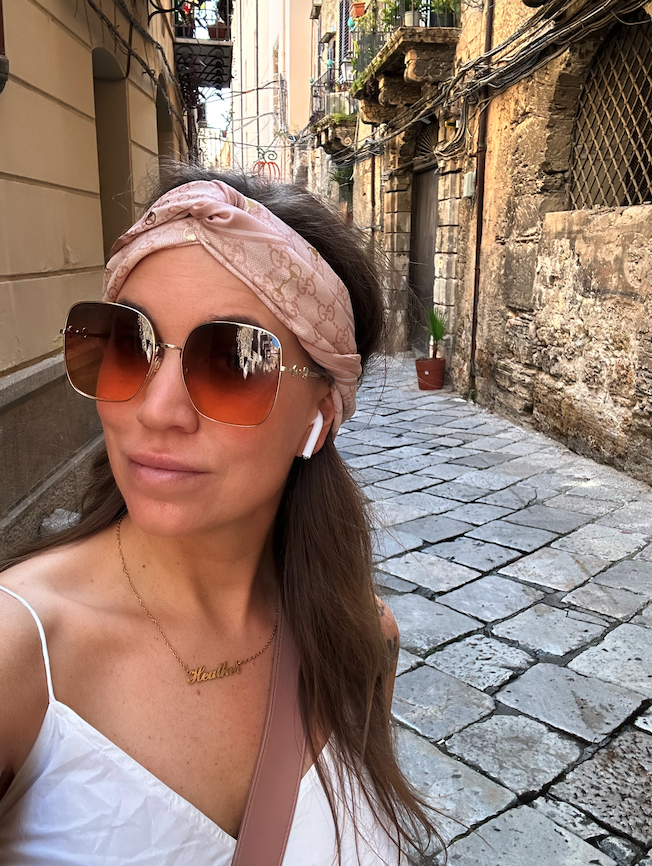
Google Maps (The "Audio-Only" Hack): This is my favorite stealth safety tip. Download your city map for offline use, then turn on voice directions and put in one earbud. This allows you to navigate a new neighborhood without ever looking at your screen. You keep your head up, your eyes on your surroundings, and your hands free. To anyone else, you just look like a local listening to a podcast- not a tourist glued to a blue dot on a map.
5. The Fortified Entry: Securing Your Sleeping Quarters
Even with a daylight arrival and a "polished" look, your safety protocol shouldn't end when you close your hotel or Airbnb door. Standard locks are built for guest turnover, not individualized security. To truly own your space, I recommend two "Type A" essentials that fit easily into a carry-on:
The Alarmed Doorstop: This is my favorite "set it and forget it" tool. You slide it under the door at night; if anyone tries to push the door open, a high-decibel alarm (usually 120dB) triggers. It doesn't just block entry; it wakes you up and alerts the entire floor.
The Portable Door Lock: Unlike a standard deadbolt, a portable door lock (like the Addalock) anchors into the strike plate of the door frame. Once it’s engaged, the door cannot be opened from the outside, even with a staff key or a digital hack. It’s a mechanical "nope" that gives you absolute control over who enters your room while you’re inside.
Logistics Note: Most doorstop alarms run on a single 9V battery. Since you’re already renting your hair tools through Rentress, you don't have to worry about packing heavy converters or multiple adapters—leaving you plenty of room for these small, high-impact safety gadgets.
6. Trusting the Data, Not Just the "Gut"
While "intuition" is real, I prefer data. Your girl is a scientist, after all. Check the recent reviews of your accommodation- specifically filtering for "solo traveler" mentions. Look for notes on street lighting, neighborhood noise, and front desk helpfulness. Also, check US State Department location data.
The Goal: We want to eliminate the "logistics friction" that leads to stress. When your hair is done, your bags are light, and your route is pre-mapped, you aren't a target—you’re an explorer.